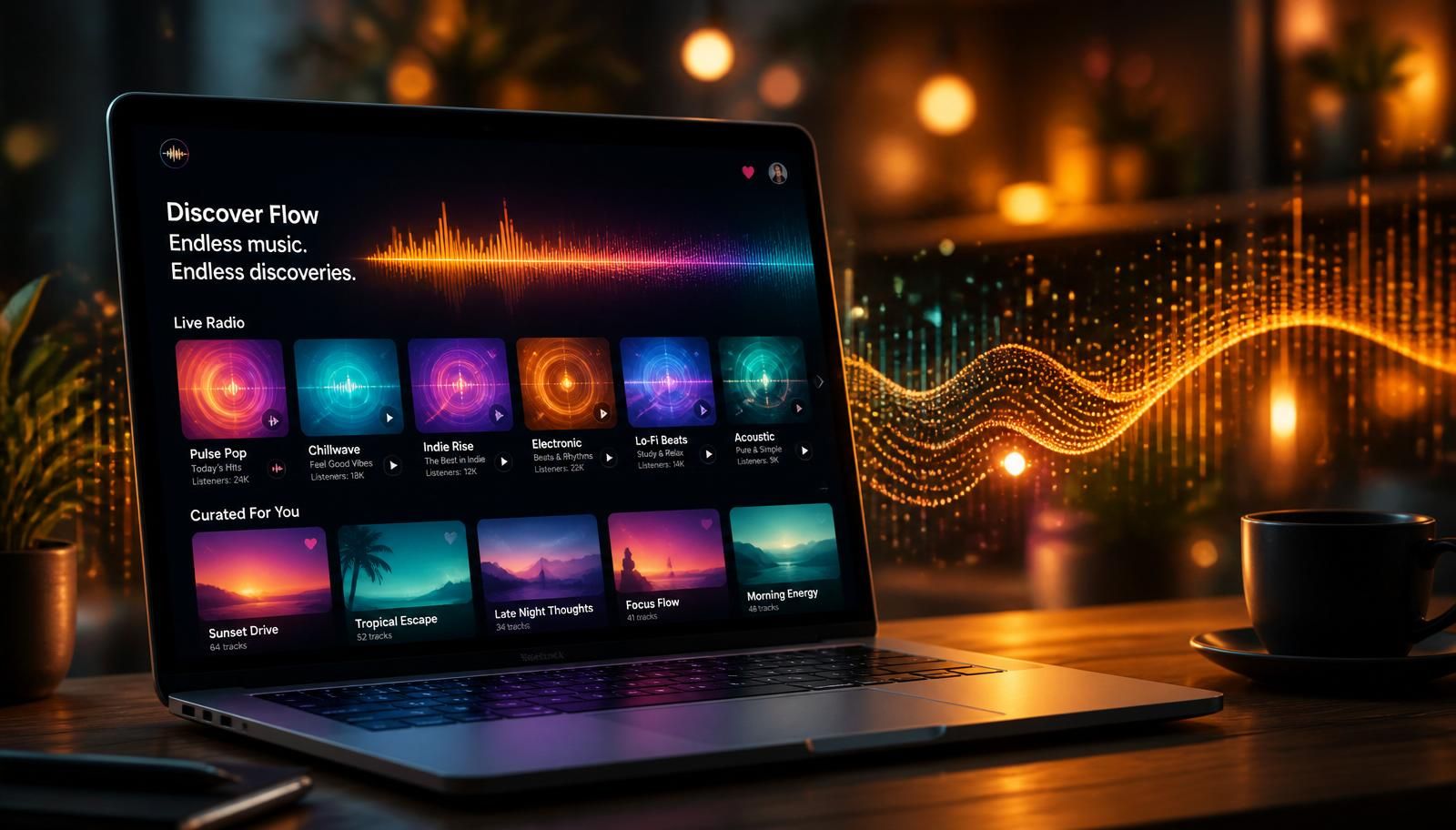
What Makes Internet Radio Better Than Music Streaming for Discovery
Discover why internet radio remains one of the best ways to find new music. Independent stations, passionate presenters and human curation offer a richer listening experience than algorithm-driven streaming.
In this article
- Streaming Is Built Around You
- Familiarity Is Good for Engagement
- Radio Introduces Music Instead of Predicting It
- Human Curators Still Matter
- The Joy of Unexpected Discovery
- Discovery Comes With Context
- Local Radio Opens Global Doors
- Why Independent Radio Often Finds Artists First
- Every Station Has Its Own Personality
- Community Radio Keeps Music Culture Alive
- Great Discovery Requires Variety
- Music Sounds Better When It Has a Story
- Beyond Genres
- Why Listening Feels More Intentional
- Building Trust Through Editorial Curation
- Building Better Listening Habits
- The Future of Music Discovery
- Discover the World's Best Radio Stations with World Radio Central
- Final Thoughts
There has never been a better time to listen to music. Between streaming platforms, online radio stations and digital archives, almost every song ever recorded is only a few clicks away. Yet many listeners share the same feeling. Despite having access to millions of tracks, discovering music that genuinely surprises them has become harder than ever.
| Internet radio | Music streaming | |
|---|---|---|
| Who chooses the music | A curator or DJ | An algorithm |
| Predictability | Low — you cannot skip | High — trained on you |
| Cost | Free, no sign up | Paid or ad-supported |
| Ads | None on public / community | Frequent on free tiers |
| Best for | Discovery, background | Playlists you already know |
| Signal to noise | High per hour | Low without curation work |
It is a strange contradiction. Unlimited choice should lead to unlimited discovery. Instead, many people find themselves listening to the same artists, the same playlists and increasingly similar recommendations every week.
Streaming services have changed the way we consume music. They have made it easier to find a specific artist, revisit favourite albums and create personal libraries that follow us everywhere. For convenience, they are difficult to beat.
Discovery is another story.
Finding music that broadens your taste requires curiosity, context and often a little unpredictability. That is where internet radio continues to shine.
At World Radio Central, we spend countless hours listening to stations from every corner of the world. From community broadcasters in Melbourne to underground electronic stations in Berlin and jazz presenters in Paris, one thing becomes obvious very quickly. Great radio introduces you to music you were never searching for.
That simple difference changes everything.
Streaming Is Built Around You
Most streaming platforms are designed to learn your preferences.
Every song you play, skip, save or repeat helps build a profile of your listening habits. The recommendations become increasingly personalised over time.
On paper, this sounds ideal.
If you enjoy soul music, the service recommends more soul. If you like indie rock, more indie rock appears. If you play ambient music while working, the platform starts serving endless relaxing playlists.
The experience becomes comfortable.
Perhaps too comfortable.
Instead of expanding your musical world, streaming often reinforces it. The more accurately a platform predicts your taste, the less often it challenges it. Without noticing, listeners can end up inside an invisible musical bubble.
Familiarity Is Good for Engagement
Streaming companies have a simple objective. They want listeners to remain on the platform for as long as possible. That means recommending music that has a high chance of being enjoyed immediately.
Safe recommendations create fewer skips. Fewer skips increase listening time. Longer listening sessions create happier subscribers.
There is nothing wrong with this approach. It simply serves a different purpose.
Discovery is often uncomfortable. The songs that become lifelong favourites are not always the ones we love within the first thirty seconds. Sometimes they require patience. Sometimes they need context. Sometimes they only make sense because of the song that came before them.
Human radio presenters understand this. Algorithms generally do not.
Radio Introduces Music Instead of Predicting It
The biggest difference between streaming and radio is surprisingly simple.
Streaming predicts. Radio introduces.
A presenter might play an unknown Brazilian jazz group immediately after a classic Miles Davis recording. An independent station may move from African funk into experimental electronic music before finishing with an acoustic folk session recorded live in Iceland.
Those transitions often make perfect sense because someone carefully designed the journey.
The listener did not ask for those songs. They simply trusted the person behind the microphone.
That trust is one of radio's greatest strengths. It creates genuine discovery rather than personalised prediction.
Human Curators Still Matter
One of the most overlooked parts of radio is the people behind it. Every great station has individuals making decisions.
- Music directors
- Presenters
- Producers
- Collectors
- Record store owners
- Local DJs
- Artists
- Community volunteers
Each brings years, sometimes decades, of musical knowledge. Unlike algorithms, these people have memories attached to music. They know why an obscure recording matters. They remember the influence one artist had on another. They understand local scenes that never became international headlines.
Most importantly, they care about telling those stories.
That human connection gives radio something streaming struggles to recreate. Personality. When listeners return to a station every week, they are often returning as much for the people as the music itself. The presenter becomes a trusted guide. Their recommendations carry weight because they have earned that trust over time.
The Joy of Unexpected Discovery
Ask any passionate music lover how they discovered their favourite artist and the answer is rarely, "An algorithm suggested it." Instead, it sounds more like this.
"I heard it late one night on the radio."
"A DJ played it between two songs I already loved."
"A presenter talked about the album before putting it on."
"My local station introduced me years ago."
These moments stay with us because they arrive unexpectedly. There is no search bar. No carefully chosen playlist. No intention. Just curiosity.
Internet radio preserves that feeling better than almost any other modern platform. You never know what comes next. Sometimes that uncertainty leads to your next favourite artist.
Discovery Comes With Context
Music becomes richer when we understand where it came from. Radio naturally provides context.
Presenters introduce artists. They explain genres. They discuss recordings. They interview musicians. They connect songs with places, cultures and communities.
Listening becomes more than simply consuming tracks. It becomes learning.
Imagine hearing an Ethiopian jazz recording followed by an explanation of how those musicians blended traditional scales with American jazz influences during the 1960s. The next song suddenly carries more meaning.
Streaming playlists rarely provide that experience. Radio does.
Local Radio Opens Global Doors
One of the greatest pleasures of internet radio is that geography no longer matters.
A listener in Australia can spend the morning with a station in Copenhagen. Someone in Canada can discover underground electronic music from Seoul. A jazz fan in South Africa can listen to presenters broadcasting live from Paris.
Every station reflects its local culture. That diversity is impossible to replicate through generic playlists.
Listening becomes a way of travelling. You begin recognising cities by their musical identity. Berlin sounds different from London. Tokyo feels different from New York. Melbourne has its own rhythm. Lisbon has another entirely.
Those differences are what make internet radio endlessly fascinating.
Why Independent Radio Often Finds Artists First
Before an artist appears on major playlists or trends across streaming platforms, they usually have to begin somewhere. That somewhere is often independent radio.
Local stations have always played an important role in introducing emerging musicians. Unlike commercial broadcasters that rely on proven audience favourites, independent stations have the freedom to take chances. Presenters can support a debut single simply because they believe it deserves to be heard.
That freedom creates one of radio's greatest strengths. Independent stations are constantly searching for music that sits outside the mainstream. Whether it is a new jazz quartet from Copenhagen, an experimental electronic producer from São Paulo or an unsigned indie band from Manchester, these stations are willing to give artists valuable airtime long before they become widely recognised.
Many internationally successful musicians built their earliest audiences through specialist radio shows and community broadcasters. For listeners, this means hearing tomorrow's favourite artists today.
There is something genuinely rewarding about discovering a musician before everyone else does. You follow their journey from small independent releases to larger stages, remembering the first time you heard them during an evening radio programme rather than after they had already become a global success.
That experience remains one of radio's greatest gifts.
Every Station Has Its Own Personality
One of the reasons people return to certain stations year after year has very little to do with individual songs. It is the overall atmosphere.
Great stations develop an identity. Some feel calm and reflective. Others are adventurous and unpredictable. Some specialise in deep electronic journeys that evolve over several hours. Others celebrate local culture, independent artists or forgotten musical traditions.
You begin recognising a station in the same way you recognise the writing style of a favourite magazine. That personality cannot be reduced to a playlist. It comes from thousands of editorial decisions made over many years. Which presenters are invited. Which genres receive attention. How programmes flow throughout the day. What values the station chooses to celebrate.
These decisions create trust. When listeners enjoy one programme, they become curious about the next. Eventually they are no longer tuning in for a particular artist. They are tuning in because they trust the station itself.
At World Radio Central, this is one of the qualities we value most when selecting stations for our Editor's List. Consistency matters. A station should reward listeners who return again and again.
Community Radio Keeps Music Culture Alive
Community radio occupies a special place within the wider world of broadcasting. Unlike commercial networks, community stations often exist to serve local audiences, support independent culture and provide a platform for voices that might otherwise go unheard.
Their playlists reflect real communities rather than market research. That means listeners encounter music with genuine regional character.
One station might celebrate Indigenous artists. Another may focus entirely on local jazz musicians. Elsewhere you may find programmes dedicated to African rhythms, underground hip hop, experimental sound art or traditional folk music.
These stations preserve musical diversity that could easily disappear in an increasingly globalised industry. For many listeners, community radio becomes a window into cultures they may never experience in person. Listening suddenly feels less like background entertainment and more like cultural exploration.
Great Discovery Requires Variety
One common habit among streaming listeners is repeating the same playlists every day. There is a playlist for working. Another for driving. Another for relaxing. Eventually those playlists become familiar.
Familiarity is comfortable, but comfort rarely leads to discovery.
Radio naturally introduces variation. A presenter might include a classic recording beside a new release. A forgotten album track might appear between two well-known songs. Genres blend together in ways listeners may never have considered.
Over time, those small moments reshape musical taste. Instead of becoming more specialised, listeners often become more open.
Someone who begins listening for jazz may gradually discover soul. Soul leads naturally into funk. Funk introduces Afrobeat. Afrobeat connects with Latin rhythms. Before long, an entire new musical landscape has opened.
That gradual expansion happens remarkably often through radio.
Music Sounds Better When It Has a Story
Think back to a song that means something special to you. The memory attached to it is probably not just the recording itself. Perhaps it reminds you of travelling. A particular city. A late-night drive. Someone you met.
Radio naturally creates these associations. Because broadcasts happen in real time, songs become connected to moments. You remember the presenter introducing the track. The weather outside. The conversation that followed. The programme where you first heard it.
Streaming rarely creates those same memories because the experience is entirely controlled by the listener. Radio adds an element of surprise that makes those moments more memorable. The song becomes part of a larger story.
Beyond Genres
Genres are useful. They help us navigate enormous collections of music. But they also have limitations.
Many of today's most exciting artists blend influences from multiple traditions. Electronic producers borrow from jazz. Folk musicians experiment with ambient textures. Hip hop incorporates world music. Contemporary classical composers embrace synthesizers.
Independent radio is particularly good at embracing these intersections. Presenters are not restricted by rigid categories. Instead they build programmes around mood, atmosphere and curiosity.
As listeners, we begin hearing connections between genres rather than boundaries. That broader perspective often leads to richer musical experiences. It also reminds us that great music rarely fits neatly inside a single label.
Why Listening Feels More Intentional
Streaming often encourages passive listening. Music becomes background sound while we work, travel or exercise.
Radio can certainly accompany daily life as well, but it also encourages moments of attention. People choose stations because they appreciate the editorial direction. They stay because they enjoy the journey. The experience becomes more deliberate.
Instead of asking, "What should I play next?" you begin asking, "Where will this station take me today?"
That subtle shift changes how we engage with music. Listening becomes an activity rather than simply background noise. It becomes something worth making time for.
Building Trust Through Editorial Curation
At World Radio Central, we believe finding great radio should be as enjoyable as listening to it. That is why we focus on editorial curation rather than endless directories.
Not every station offers the same experience. Some stand out because of exceptional programming. Others because of their originality. Some create a unique atmosphere that listeners return to for years.
Our aim is to highlight those stations that consistently reward curiosity. We believe listeners deserve recommendations made by people who genuinely enjoy exploring radio from around the world.
Popularity is only one measure. Character matters much more. A station with a devoted community, thoughtful presenters and carefully curated programming often delivers a far richer listening experience than one simply chasing the largest audience.
That philosophy shapes every recommendation we publish.
Building Better Listening Habits
The way we discover music influences the way we experience it. When every recommendation is based on what we already enjoy, our musical world slowly becomes smaller. We become experts in a handful of genres while missing countless artists, cultures and recordings that sit just outside our comfort zone.
Radio encourages a different habit. Instead of constantly choosing, we spend more time listening. Instead of searching, we become open to finding.
One simple way to broaden your musical horizons is to dedicate time each week to a station you have never heard before. Perhaps it is an independent broadcaster in Tokyo. Maybe it is a jazz station from New Orleans. Or an electronic station based in Berlin.
Don't worry if every song is unfamiliar. In fact, that is often a sign that you have found something worthwhile. Discovery is rarely instant. It grows through curiosity and repetition.
The more stations you explore, the more connections you begin to hear between artists, genres and cultures. That is where radio becomes more than entertainment. It becomes an education.
The Future of Music Discovery
Streaming is not going away. Nor should it. It remains one of the most convenient ways to build personal collections, revisit favourite albums and listen on demand.
Internet radio serves a different purpose. Rather than replacing streaming, it complements it.
Many listeners discover new artists on radio before saving albums on their preferred streaming platform. Others use radio to explore unfamiliar genres before diving deeper into an artist's catalogue. The two experiences work best together. Radio inspires. Streaming allows you to continue the journey.
As more listeners look for authentic recommendations instead of endless algorithmic suggestions, independent radio is becoming increasingly relevant once again. People are seeking personality. They want context. They want trusted voices. Most of all, they want to feel surprised.
Radio has been delivering that experience for generations. Today, thanks to the internet, it is available from almost anywhere in the world.
Discover the World's Best Radio Stations with World Radio Central
World Radio Central was created for listeners who believe music discovery should feel exciting. Instead of overwhelming you with thousands of random stations, we focus on helping you find broadcasters that genuinely stand out.
Our editorial team listens extensively across genres, countries and communities to identify stations that reward repeat listening. Some specialise in deep electronic journeys. Others celebrate jazz, soul, folk, world music or independent artists. Many combine multiple genres in ways that make every listening session different from the last.
Whether you are searching for a soundtrack to your morning, an evening jazz programme, experimental electronic music or simply something completely unexpected, there is always another station waiting to be discovered.
For a perfect example of genre-blending discovery, try Radyo Voyage from Istanbul. The station weaves world music, ambient textures and cinematic soundtracks into one continuous listening experience that feels like musical travel without leaving your room.
Our genre guides help you explore styles that match your interests. Our station pages introduce broadcasters with distinctive editorial identities. Our Editor's List highlights the stations we return to again and again because they consistently deliver exceptional listening experiences.
The goal is simple. Help more people fall in love with radio again.
Final Thoughts
Music discovery has always been about more than finding another song. It is about finding a new perspective. A new culture. A new voice. A station that introduces artists you would never have discovered alone.
Streaming platforms have transformed access to music, but access is only the beginning. True discovery still depends on curiosity, trust and human judgement.
That is why internet radio continues to matter. Every great presenter, every carefully planned programme and every independent station represents years of musical knowledge waiting to be shared.
Sometimes the best song you hear all year is not one you searched for. It is the one you never expected.
That is the magic of radio. And it is exactly why, at World Radio Central, we continue to believe there is no better way to discover music.
If you want somewhere concrete to begin, start with our editors' ranking of the 50 best internet radio stations.
Frequently asked questions
Is internet radio free?
Most internet radio stations can be streamed free of charge through their websites or dedicated apps. Many are supported by public funding, donations, memberships or carefully selected advertising rather than subscriptions.
Is internet radio better than Spotify?
They serve different purposes. Spotify is excellent for listening to artists and albums you already know. Internet radio excels at introducing artists, genres and stations you may never have searched for yourself. Many music lovers enjoy using both together.
Can I discover new music through internet radio?
Absolutely. Independent stations, community broadcasters and specialist presenters often introduce emerging artists long before they become widely recognised. Radio remains one of the most effective ways to expand your musical horizons.
What makes independent radio different?
Independent stations are generally driven by editorial passion rather than commercial playlists. Presenters have greater freedom to introduce new artists, explore niche genres and build programmes around musical ideas instead of audience statistics.
Can I listen to radio stations from other countries?
Yes. One of the greatest advantages of internet radio is that listeners can access stations from almost anywhere in the world. Exploring broadcasters from different countries is one of the best ways to discover new artists and musical traditions.
How do I start discovering better radio stations?
Begin with a handful of stations that match your current interests, then gradually branch into neighbouring genres and countries. Over time you will develop favourite stations with their own personalities, presenters and communities. World Radio Central is designed to make that journey easier.
More from the Journal

Discover new online electronic radio stations
Six stations that map the modern electronic underground. From Berlin community radio to Parisian magazine outposts and label radios broadcasting their own catalogs.

50 Best Internet Radio Stations Worth Listening To (2026 Edition)
From legendary broadcasters to independent gems, these are the internet radio stations that continue to inspire music lovers around the world.

The best world music radio stations to stream right now
Twelve stations, eight countries, one thread: music that doesn't stay inside a single border. A guide to World Radio Central's world music collection.
Find better radio.
Get occasional listening notes, station discoveries and editorial picks from World Radio Central.